Terrain, footing, and panel choice
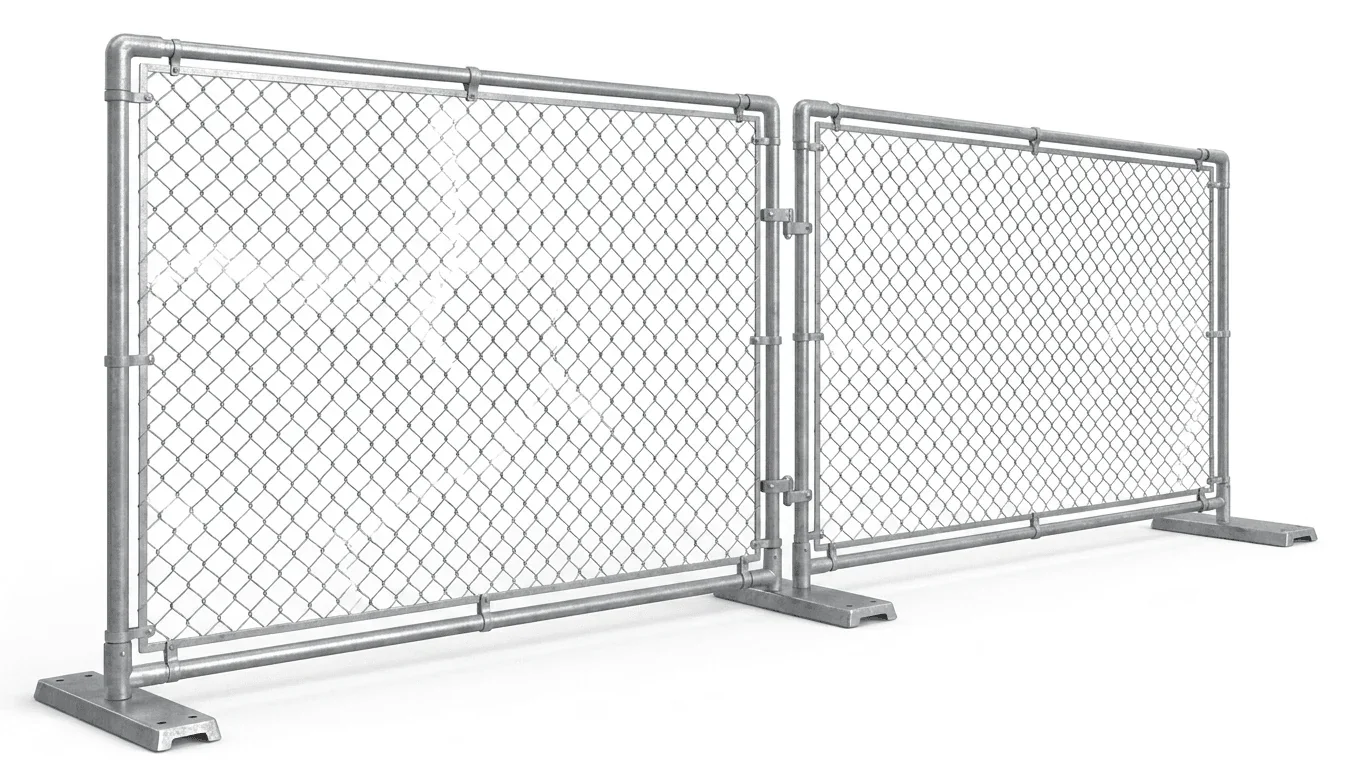
Undulating grades create gaps under straight panels. On red clay that softens after storms, freestanding bases may tilt unless loads are well-distributed. Where the ground falls away, shorter panels stepped to grade can reduce underclearances. Near paved aprons, pin bases or weighted feet help resist movement per the unit’s instructions and site procedures.
Water flow and access breaks
Frequent rainfall can turn low spots into channels. Avoid placing barricades where runoff will undermine bases. Plan defined openings for lift traffic and pallet routes so panels aren’t moved repeatedly. On distribution campuses, separate pedestrian lines from forklift aisles with high-visibility barricades and predictable crossings.
Perimeter around aerial work
When scissor lifts or booms operate near the public, barriers create a buffer from tool drop zones. The required offset depends on task height, local procedures, and the equipment’s instructions. For aerial categories in Birmingham conditions, compare /aerial-lift-rental/, /boom-lift-rental/, /articulating-boom-lift-rental/, and /telescopic-boom-lift-rental/.
Gate planning for deliveries
Set gates where trucks can straighten before entering. On tight urban sites, a double-swing opening may be easier to manage than moving panels. Keep sightlines clear at corners near busy drive lanes.
site-stability factors and wind exposure
Open ridgelines and exposed lots can increase wind on panel faces. Match site-stability factors strategy to exposure and surface type. On saturated ground, spread loads to prevent legs from sinking.
Integration with other site products
Containers at /storage-containers-rental/ often sit just inside a secured perimeter to speed unloading. Light towers at /generators-light-towers-rental/ should be placed so cables don’t cross pedestrian detours.
For category comparisons across lifts and site products, see /products/.